teaching
Lectures at the Chair of Metrology, University of Rostock
In my lectures I focus on activating and interactive teaching. Comprehension questions, short knowledge checks and feedback are integrated directly into the lecture via the digital feedback system of the learning platform. The exercises use interactive Pluto.jl notebooks written in Julia, which give immediate feedback and allow self-paced, step-by-step learning. An overview is available on the teaching pages of the Chair of Metrology.
Teaching portal: interactive slides
The lecture slides are hosted on the teaching portal lehre.graeser.biz. They are not static PDFs but interactive web pages in the design of the chair:
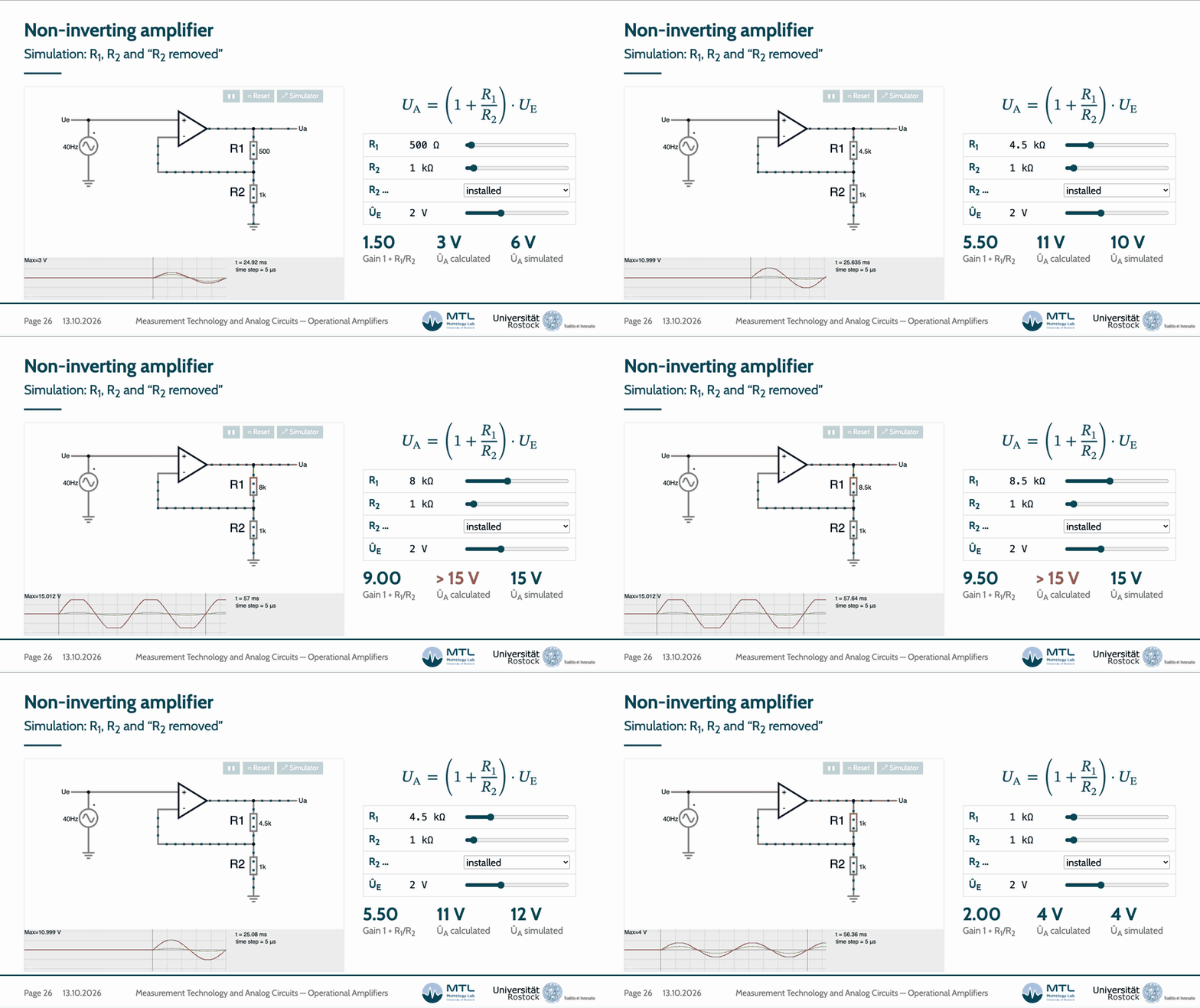
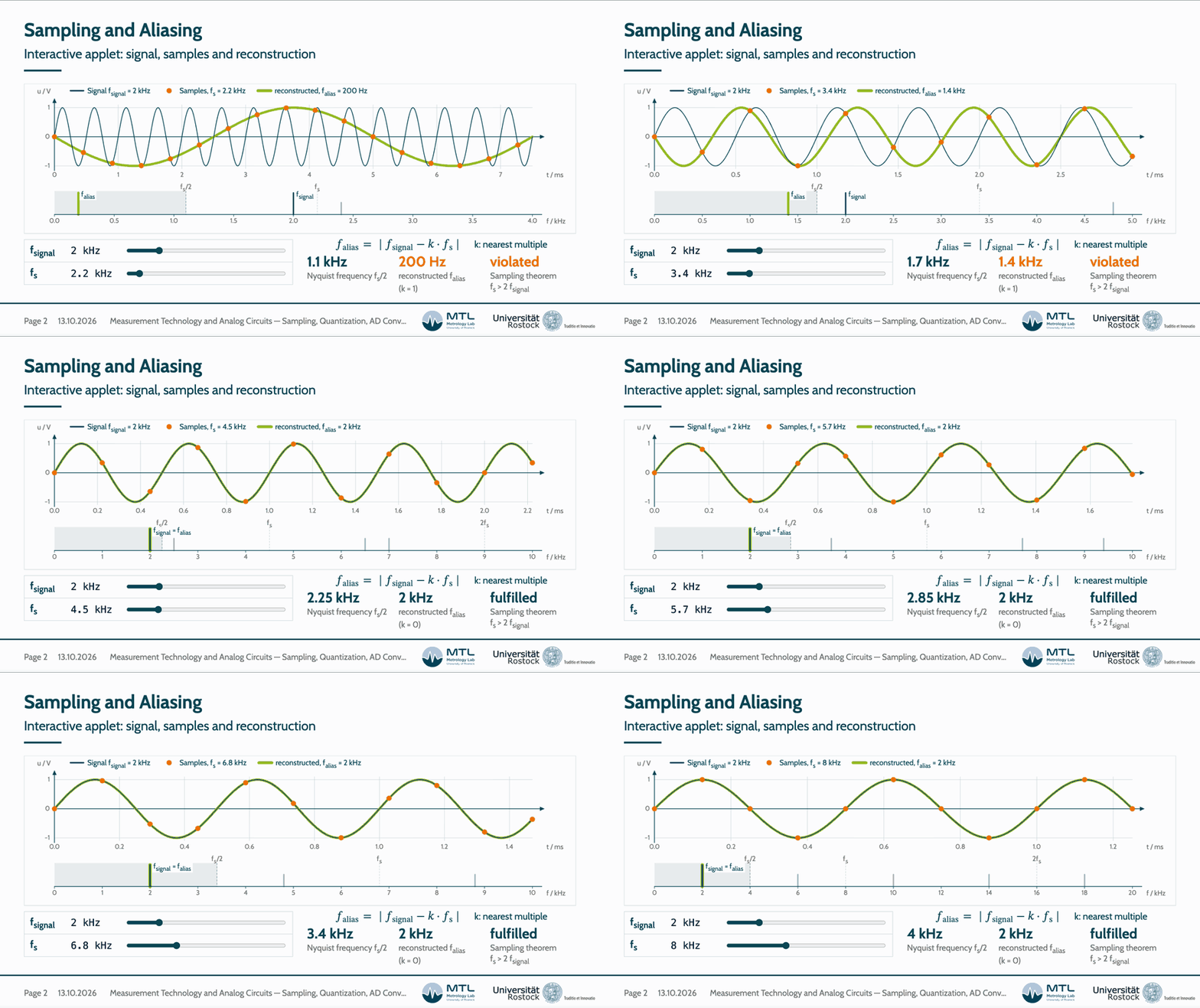
- Circuits that run on the slide. Every circuit discussed in the lecture is embedded as a live simulation (CircuitJS) with sliders for its main components. Changing a resistor or a capacitor shows its effect on signals and transfer functions immediately, in the lecture hall and later at home.
- Follow along on your own device. During the lecture, the slides on the students’ laptops and tablets follow the current slide of the lecturer. Everyone can browse back at any time and jump to the live position again.
- Handwriting and questions. Derivations are written by hand on an iPad and appear in real time on the projector and on all connected devices. Students can send questions to the lecturer during the lecture.
- Self-study. Slide sets, speaker notes and interactive applets remain available after the lecture and can be downloaded as PDF.
The slide engine is based on the presentation system of Dieter Suess (University of Vienna) and was extended with the circuit module and the live functions. Access to the lecture slides requires a student account that is announced in the lecture.
The lecture modules are listed on the modules page.