Multi-Contrast MPI and Magnetic Sensing
Resolving pH, bleeding and coagulation with magnetic nanoparticles
Magnetic particle imaging is quantitative and tracer based. Beyond the concentration of a tracer, the particle signal also carries information about the particle environment: mobility, binding state, temperature, viscosity. Multi-contrast MPI separates the contributions of different particle systems or particle states within one measurement and turns MPI into a sensing modality.
pH monitoring. Stimuli-responsive hydrogels loaded with magnetic nanoparticles swell depending on the pH value. The swelling changes the particle spacing and therefore the magnetic signal. With multi-contrast reconstruction, the pH value can be resolved tomographically in a 3D MPI measurement.
Gastrointestinal bleeding. Two tracers with different spectral fingerprints allow blood that leaks into the bowel lumen to be separated from the vascular signal in real time, both in phantoms and in ex vivo porcine small bowel.
Coagulation monitoring. Using a magnetic particle spectrometer at the bedside, the clotting of human blood samples mixed with the clinically approved tracer Resotran can be followed continuously via the change of the particle mobility.
Negative contrast. A saline bolus displaces the tracer in the blood pool and yields a negative contrast that can be used for perfusion imaging without additional tracer injection.


References
2026
-
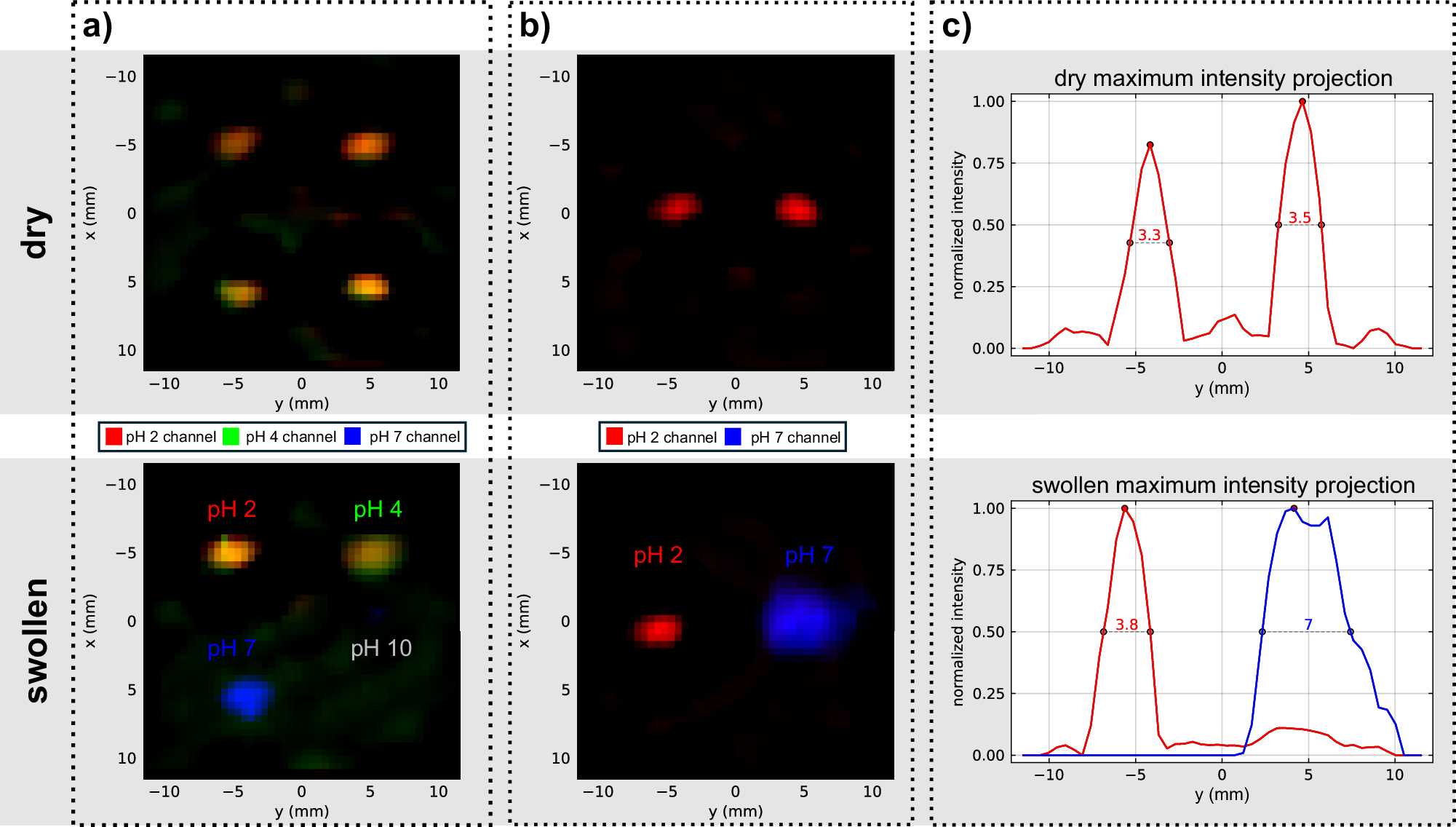 Multi-contrast magnetic particle imaging for tomographic pH monitoring using stimuli-responsive hydrogelsCommunications Engineering, 2026
 -
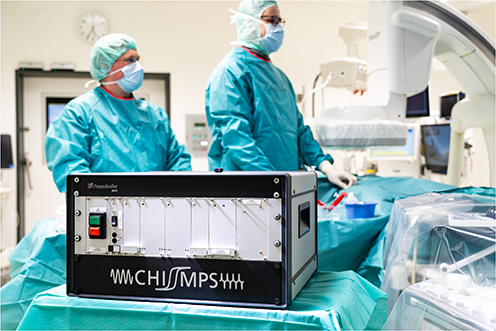 Continuous Coagulation Monitoring in Human Blood Samples via Magnetic Particle SpectroscopyInternational Journal of Nanomedicine, 2026
 - Coagulation Induced MPS-Signal Changes in Human Blood SamplesIn International Workshop on Magnetic Particle Imaging 2026, 2026

2023
-
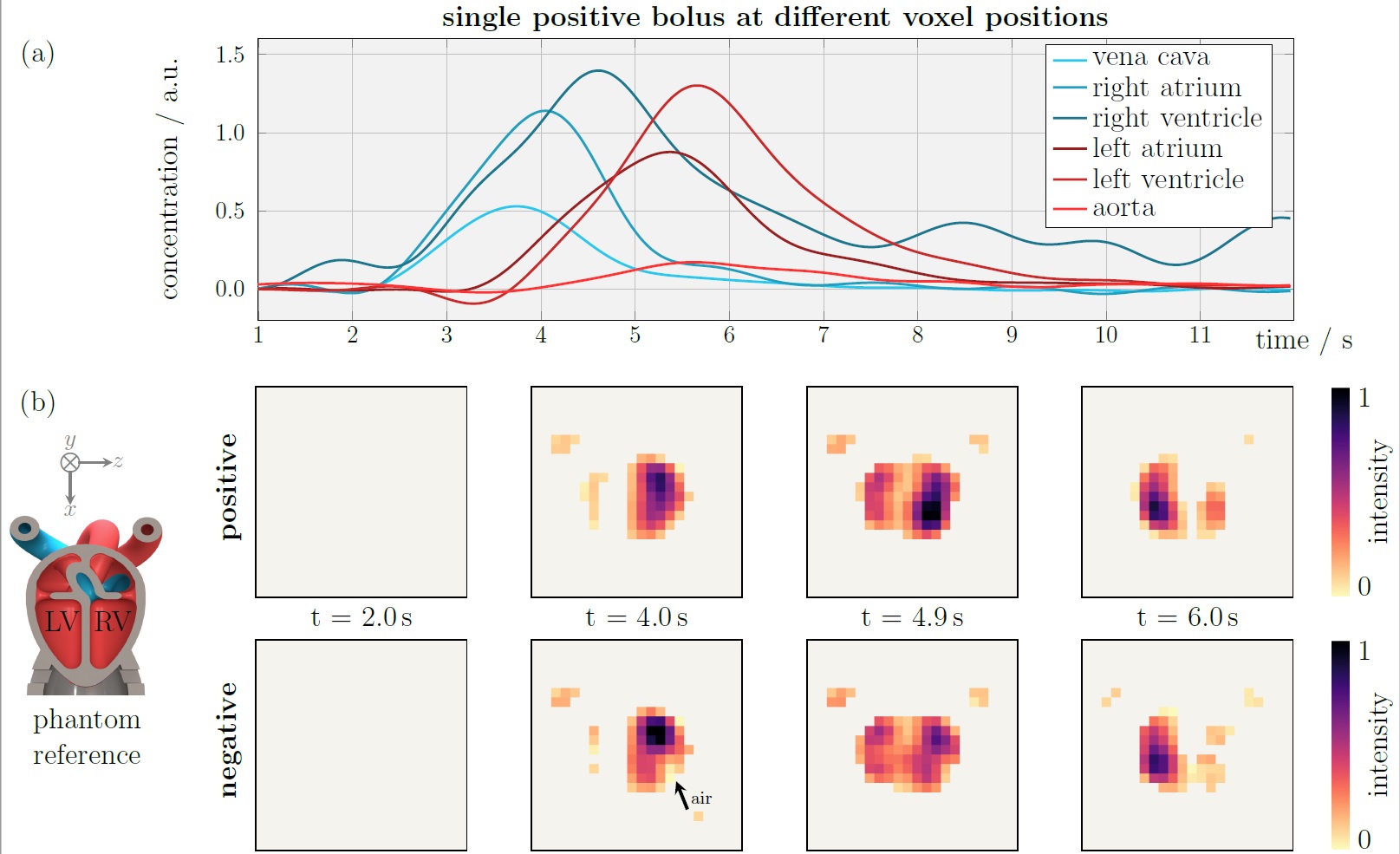 Saline bolus for negative contrast perfusion imaging in magnetic particle imagingPhysics in Medicine & Biology, 2023
 -
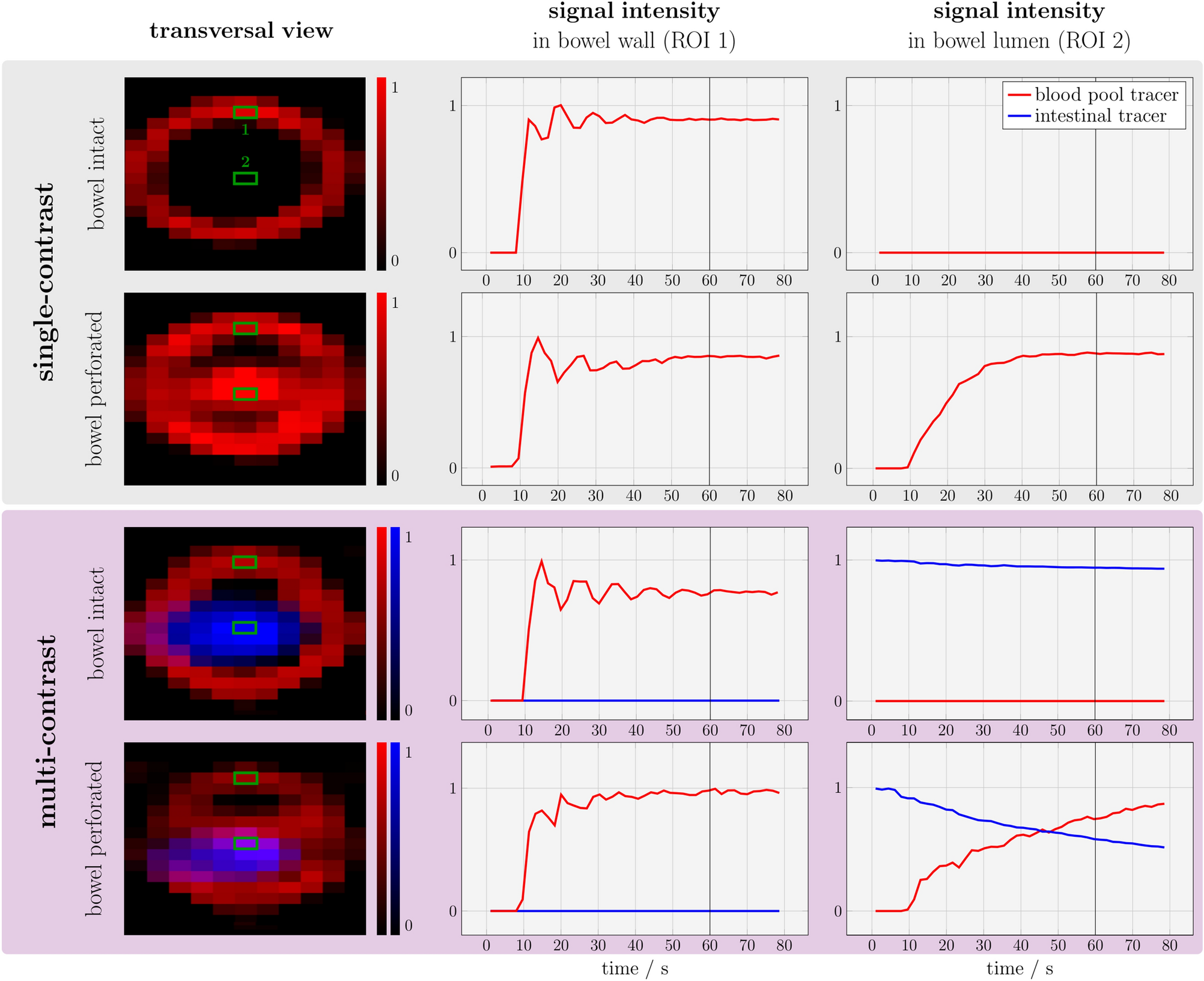 Real-time multi-contrast magnetic particle imaging for the detection of gastrointestinal bleedingScientific Reports, 2023
